Security Tool Sprawl: Why 5.3 Tools Per Team Isn't a Number Problem

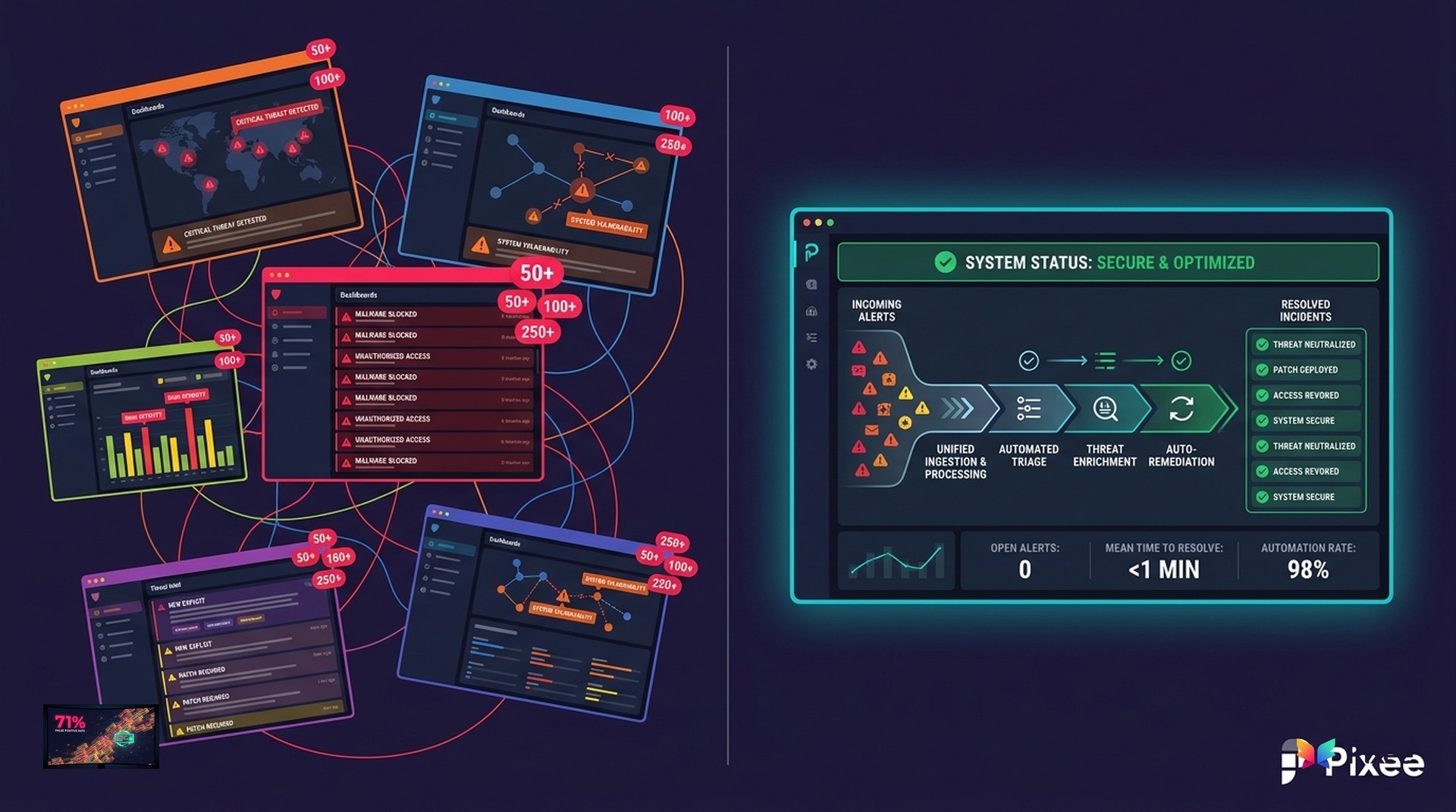
The average application security team runs 5.3 security tools. 58% of organizations run 25 or more (Wiz CISO Budget Benchmark 2026). And 97% plan to consolidate their AppSec stacks within a year (Cycode 2026). If you're reading this, you're probably running more tools than you'd admit to your board.
You have a SAST scanner (maybe two: one your developers chose, one your security team mandated). An SCA tool for dependency vulnerabilities. A DAST scanner for production. A secrets scanner. An ASPM platform to aggregate the findings from all of them. Maybe a container scanner. Maybe a cloud security posture tool that also scans code. Possibly a new AI SAST solution.
Each tool has its own dashboard, its own finding format, its own severity taxonomy, its own alerting rules, and its own team of vendor support engineers who email you quarterly about new features you're not using.
Here's the data point that reframes the entire conversation: teams running 6-8 security tools have a 90% security incident rate, compared to 9% for teams running 1-2 tools (Aikido State of AI Security 2026). More tools doesn't mean more security. It means more noise, more context switching, more alert fatigue, and possibly worse outcomes, although correlation does not imply causation.
The industry calls this "tool sprawl." But the conventional framing misses the real problem: tool sprawl isn't about having too many tools. It's about having too many tools that all do the same thing (detect vulnerabilities) and zero tools that fix them.
The Real Cost Isn't License Fees
When CISOs calculate tool sprawl costs, they typically add up license fees. Five tools at $50K-150K each is $250K-750K annually. That number gets attention in budget reviews.
But the license cost is the smallest component:
Triage multiplication. Each scanner produces findings in its own format with its own severity ratings. The same SQL injection gets flagged by your SAST tool (Critical), your SCA tool (High, because it's in a framework dependency), and your ASPM platform (aggregated but not deduplicated). Your security engineer investigates the same issue three times before realizing it's one finding reported by three tools.
Alert fatigue compounding. With 5.3 tools, each producing findings with a 71-88% false positive rate, your aggregate false positive volume isn't additive. It's multiplicative. The same false positive appears in multiple tools, each requiring separate investigation.
Integration tax. Every tool needs CI/CD integration, SSO configuration, RBAC setup, webhook configuration for ticketing, and ongoing maintenance when APIs change. Five tools means five integration surfaces, each requiring engineering time to maintain.
Context switching. A security engineer investigating a finding switches between SonarQube's dashboard, Snyk's issue view, the ASPM aggregator, the code repository, and the CI/CD pipeline. Each context switch takes an average of 23 minutes to fully refocus (Gloria Mark, UC Irvine). With 5.3 tools, context switching consumes more time than actual triage.
The number that matters: Organizations with 5+ security tools spend 6+ hours per developer per week on security-related work. The aggregate alert volume tells the story: the average organization now receives 865,398 security alerts per year (OX Security 2026), up 52% year-over-year. Not because they have too many tools, but because none of their tools close the loop from finding to fix.
Why "Consolidate to One Platform" Is the Wrong Answer
The standard analyst recommendation: reduce your tool count by consolidating onto a platform. Pick one vendor for SAST, SCA, and DAST. Reduce dashboards, reduce integration surfaces, reduce license costs.
This sounds logical but ignores three realities:
1. No single scanner is best at everything. SonarQube's Java SAST rules are better than Snyk's. Snyk's SCA reachability analysis is better than SonarQube's. Semgrep's custom rule authoring is better than both. Forcing consolidation means accepting worse detection in at least one category.
2. Developers already chose their tools. Your security team mandated Checkmarx. Your developers installed Semgrep because it's faster. Your DevOps team uses Trivy for container scanning because it's free and runs locally. "Consolidate" means fighting three organizational constituencies simultaneously.
3. Detection isn't the bottleneck. Adding or removing a scanner changes how many findings you discover. It doesn't change how many you fix. With a 252-day average MTTR for critical vulnerabilities, the bottleneck is remediation, not detection.
The Scanner-Agnostic Layer
The alternative to tool consolidation is tool orchestration: keep your existing scanners (they're already integrated, your teams know them) and add a layer that operates across all of them.
This layer needs two capabilities:
Scanner-agnostic triage. Ingest findings from any scanner — SARIF format standardization makes this possible across 50+ tools — and deduplicate, correlate, and triage them through a single analysis pipeline. One investigation per finding, regardless of how many scanners reported it. 95% false positive reduction across all your tools simultaneously.
Scanner-agnostic remediation. Generate fixes for confirmed vulnerabilities regardless of which scanner found them. A SQL injection is a SQL injection whether SonarQube, Checkmarx, or Semgrep flagged it. The fix is the same. Automated remediation that works across 12+ scanner integrations means you don't need to standardize on one scanner to get consistent fix quality.
This approach doesn't reduce your tool count. It makes your tool count irrelevant. Whether you run 3 tools or 7, the triage and remediation layer processes all findings through one pipeline.
What Consolidation Actually Looks Like
Real consolidation removes redundant work, not scanners:
BeforeAfter5 dashboards, 5 investigation workflows1 triage pipeline, findings from all scannersSame finding investigated 3 times (3 scanners)Deduplicated: 1 investigation per unique finding71-88% false positive rate per scanner95% false positive elimination before anyone sees a findingManual remediation: 252-day MTTRAutomated fixes: PRs generated for confirmed issues0 tools that fix anythingTriage + remediation in one pipeline
The scanner count stays the same. The work per finding drops to near zero for the 95% that are false positives, and drops to PR review time for the real issues that get auto-fixed.
When You Actually Should Remove a Scanner
Tool sprawl IS real when:
The question isn't "how many tools do we have?" but "does each tool tell us something the others don't?"
Measuring Whether Your Stack Is Working
Instead of counting tools, measure these:
Finding-to-fix ratio. What percentage of confirmed findings result in a merged fix within 30 days? If your detection tools produce 1,000 confirmed findings per month and your team fixes 50, adding more detection tools makes the ratio worse.
Time to first investigation. How long does a new critical finding sit before someone looks at it? If findings queue for days because engineers are triaging other scanners' output, your tools are competing for the same human bandwidth.
Developer time on security. How many hours per developer per week go to security-related work? If this number is rising while your vulnerability count stays flat, your tools are consuming capacity without producing outcomes.
Unique findings per tool. For each scanner, what percentage of its findings are unique (not duplicated by another scanner)? If 80% of Tool B's findings are already reported by Tool A, Tool B's marginal value is the remaining 20%.
The Missing Layer
Most security stacks have detection covered. What they lack is the layer between "finding reported" and "vulnerability fixed." That layer needs to do two things: eliminate false positives so your team stops investigating noise, and generate fixes for real issues so developers don't have to write them manually.
Vendors building this layer (Pixee, Mobb, and others) take different approaches, but the architecture is consistent: ingest findings from existing scanners, triage for exploitability, generate fixes, and validate through CI/CD before shipping a PR.
If you're evaluating tools in this category, apply the same measurement framework from the previous section. The tool that produces the best finding-to-fix ratio with the lowest FTE overhead wins, regardless of what the vendor calls itself.
The staffing reality makes this urgent: 89% of CISOs report their teams are stretched thin or understaffed (IANS State of the CISO 2026). Developer experience is now the #1 buying criterion for security tools, ranking above detection accuracy and false positive rates (Latio AppSec Market Report 2026). The market is telling you: consolidate around outcomes, not coverage.
Related Reading