AWS Bundles 14 Security Vendors Into One Bill. What's Missing Tells the Real Story

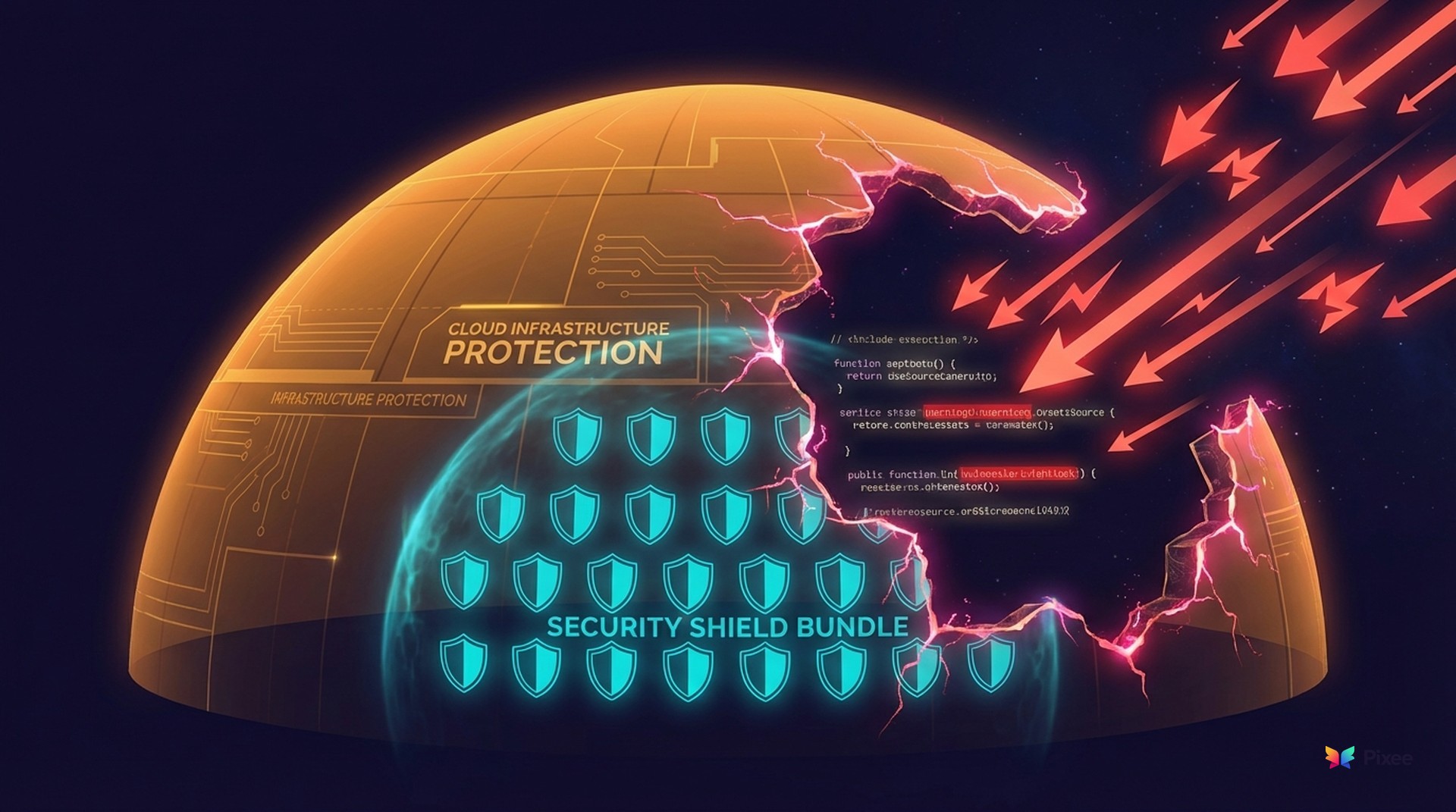
When AWS launched Security Hub Extended this week, bundling 14 security partners into a single bill, the industry took notice. CrowdStrike, Okta, Zscaler, Proofpoint, Splunk, and nine others are now available through one AWS relationship with OCSF-normalized findings and pay-as-you-go pricing.
The headline reads as a consolidation story. But the gaps in this bundle reveal more about where platform security works, where it falls short, and what it means for AppSec teams deciding where their tooling dollars go this year.
The Platform Consolidation Promise
Security Hub Extended covers endpoint, identity, email, network, data, browser, cloud, AI, and security operations. One bill, one support relationship, one normalized data format across your AWS estate. For CISOs managing a dozen vendor contracts: fewer procurement cycles, a single escalation path, and unified reporting for board-level posture summaries.
When a cloud provider with AWS's market share becomes the seller of record, standalone vendors lose the convenience argument. Differentiation must come from depth alone. Partners in the bundle trade distribution for margin compression and weaker direct customer relationships. Those outside face rising pressure to justify standalone pricing.
We've seen this playbook before. CloudWatch vs. Datadog. IAM vs. Okta. Cloud providers build "good enough" capability into the platform, forcing standalone vendors to prove their depth justifies the complexity. Datadog survived because observability at scale demanded capabilities CloudWatch couldn't match. Okta held because enterprise identity federation required depth beyond native IAM. Vendors that thrived solved problems the platform couldn't abstract away. Where "good enough" sits varies by domain, and that distinction matters here.
What's Missing: Application Security
SAST, DAST, and SCA are absent from the launch partner list. Security Hub Extended focuses squarely on runtime and infrastructure.
AppSec vendors may not have been ready for OCSF normalization. Commercial terms may not have aligned. It could simply be Phase 2. Regardless, the absence highlights something structural: application security remains harder to abstract into a platform play than infrastructure security.
Infrastructure findings are relatively uniform. A firewall misconfiguration in one AWS environment looks structurally similar to one in another. Normalization works because the underlying data formats converge. Application security is contextual. Assessing exploitability requires knowledge of specific codebases, execution paths, authentication boundaries, and deployment patterns. Normalizing those findings across thousands of environments is a harder problem by an order of magnitude.
This is where the detection-to-remediation gap shows up most clearly. Security Hub Extended gives you faster, broader visibility into findings. But visibility is a detection problem. AppSec teams are bottlenecked on what comes after: assessing exploitability, generating contextual fixes, testing them, and getting developers to merge them.
According to Datadog's 2026 State of DevSecOps report -- a dataset we analyzed in detail in this week's AppSec Weekly briefing -- the median dependency trails its latest major version by 278 days, worsening from 215 days the year prior. Java and Ruby fare significantly worse at 492 and 357 days respectively. Deployment velocity correlates: teams shipping daily keep dependencies 172 days behind, while teams deploying less than monthly sit at 295 days. Faster release cycles produce better security posture as a side effect.
These aren't detection problems. Most teams already know that 77% of their codebase comes from third-party dependencies with known vulnerabilities. The time sink is assessing exploitability, producing a fix that fits your codebase conventions, testing it, and getting it merged. A consolidated view of those same known vulnerabilities doesn't change that math.
The Workforce Pressure Underneath
The detection-to-remediation gap compounds against a workforce already under strain. Cybersecurity professionals are working longer hours as burnout climbs -- a crisis we've tracked since half of security leaders reported burnout severe enough to compromise breach prevention -- and analysts describe the current pace as a "six-day security week" where AI adoption outpaces governance capacity. Platform consolidation is pitched as the relief valve: fewer tools, fewer context switches, less vendor management overhead. For infrastructure security, that argument holds.
For application security, the math differs. Another dashboard -- even a well-consolidated one -- doesn't reduce the hours your team spends on triage and remediation. It shifts where those hours go. If the binding constraint is time-to-fix rather than time-to-find, visibility alone doesn't relieve a stretched team.
This is the quiet failure mode of consolidation plays: they optimize the executive reporting layer while leaving practitioner workload untouched. Your CISO gets a cleaner quarterly slide. Your AppSec engineers still spend Tuesday mornings the same way.
When Bundling Creates Complexity Instead of Reducing It
Security Hub Extended simplifies vendor management. It also introduces trade-offs worth evaluating before you sign:
Lock-in risk. Routing purchasing through AWS deepens cloud dependency. Unwinding later is expensive.
Customization limits. Configuration options in a standalone product may not surface through the bundled integration.
Support ambiguity. Issues spanning multiple bundled vendors create resolution delays. Who owns the ticket when a CrowdStrike finding doesn't normalize correctly in Security Hub?
Pricing opacity. "One bill" is convenient until you need to justify renewing one tool and dropping another.
Migration asymmetry. Moving in is easy (AWS handles onboarding). Moving out is harder once workflows, integrations, and reporting all run through Security Hub.
How Three AppSec Teams Approached Platform Consolidation
Here's how three team profiles approached the platform-vs-specialized decision, drawn from composite patterns across real evaluation cycles.
Team A: 200-person engineering org, AWS-native, 3-person security team. Vendor management overhead was their primary constraint -- more time on procurement, renewals, and integration maintenance than on security work. Security Hub Extended was a clear win for infrastructure. They kept AppSec tooling separate because their SAST tool's IDE integration drove 60% of developer-initiated fixes, a workflow no normalized findings feed could replicate.
Team B: Regulated financial services, 12-person AppSec team, 120k vulnerability backlog. They evaluated Security Hub Extended for compliance reporting efficiency. OCSF normalization gave them a single audit trail across endpoint, network, and cloud findings. They passed on using it as their operational console because triage depended on tool-specific context (severity scoring, exploitability analysis) lost in normalization.
Team C: Series D startup, fast-growing codebase, 2 AppSec engineers. Their bottleneck was remediation velocity, not detection. Existing tools gave them adequate visibility. They treated the announcement as irrelevant to current priorities and revisited the bundle six months later when their infrastructure stack needed rationalization.
The common thread: every team that evaluated well started by identifying whether their primary constraint was detection, visibility, vendor management, or remediation. Security Hub Extended addresses the first three. It does not address the fourth. Teams that conflated "better visibility" with "faster remediation" ended up with a new dashboard and the same backlog.
The Bottom Line
AWS Security Hub Extended is a meaningful step forward for infrastructure security consolidation. For teams focused on visibility, compliance, and detection across standardized domains, it delivers real value. The partner roster is strong, OCSF normalization solves a genuine interoperability problem, and the single-bill model eliminates procurement friction. "Good enough" platform security will keep improving, and standalone infrastructure vendors will face increasing pressure to differentiate on depth.
It also puts the gap between detection and remediation into sharper relief. Aggregating and normalizing findings from 14 tools is now possible. Generating contextual, mergeable fixes from a platform layer is not. That work remains dependent on codebase-specific understanding that doesn't lend itself to normalization.
Effective security strategies will combine platform consolidation where it fits (infrastructure, compliance, detection) with specialized approaches where context matters (remediation workflow, developer integration, exploitability triage). Neither camp has a monopoly on the right answer.
If you're evaluating Security Hub Extended this quarter, start with one question: what is the actual constraint on your team's outcomes? If it's vendor sprawl and fragmented reporting, the bundle helps. If it's the gap between finding vulnerabilities and shipping fixes, consolidated dashboards won't close it. Getting that diagnostic right shapes everything downstream.