Foresight follows your security intent from design through implementation, so that what you intend is what you ship.
Scanners see code after it exists. Foresight reviews the intent before the code is written.
Scanners can't catch an IDOR. It's a valid request that returns someone else's data, and the tool has no idea who that data belongs to. That's broken access control — the #1 risk in the OWASP Top 10:
Decide it at the design stage, and you close the whole class.
Source: OWASP Top 10:2021, A01 Broken Access Control.A flaw caught while it's still a sentence in the spec is a one-line edit. In production it requires finding, triaging, fixing, and merging — before it gets exploited.
It bleeds forward from the spec, through the build, into what ships, getting harder to see at every step.
"Access will be appropriately restricted" isn't a promise; it's a hidden decision no one consciously made. The agents building from it inherit the gap.
A ticket says what to build, not what to protect. Whoever builds it, human or agent, never sees the security intent that lived only in the design.
By the time it's a pull request, the flaw is already shipping, and nothing downstream is checking it against what was intended.
"These are the kind of things you can never track as a human, because you could never keep up with all the PRs scattered across your organization. We now have the ability to."— Arshan Dabirsiaghi, Co-founder & CTO, Pixee
One model of your security promises, working from the spec to the pull request.
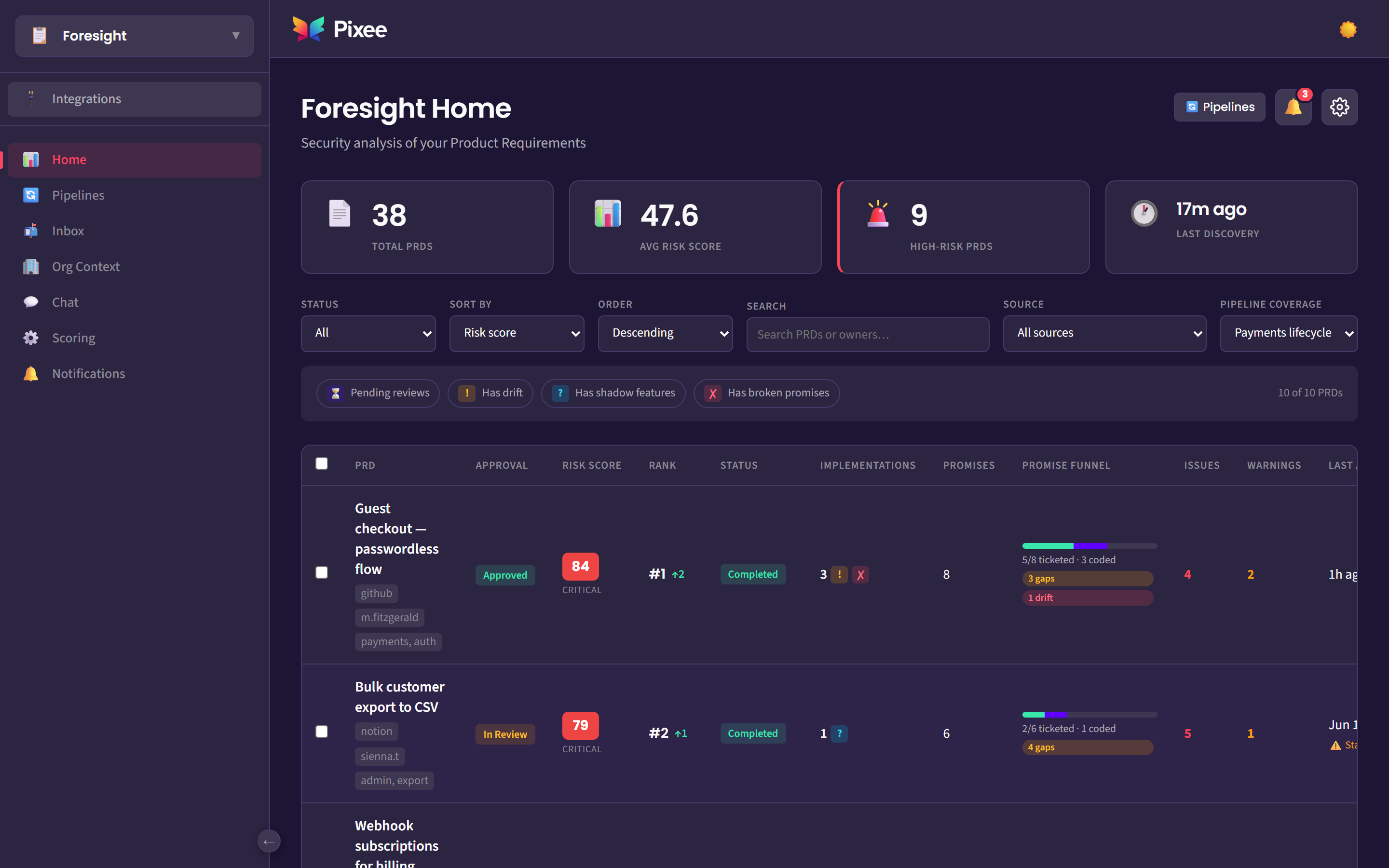
Foresight ingests your PRDs, design docs, and tickets as they're written.
It pulls the security promises the design makes — explicit and implicit — and the misuse cases teams could never write at scale.
It pushes those promises into your tickets, so engineering sees them at planning, not after launch.
When a PR lands, Foresight checks the shipped code against the design's promises and flags what broke — with a direct line back to the spec that promised it.
Example finding — a promise that drifted
Every finding ties to a spec line and a threat, logged as an auditable record — not another alert.
VulnOps: Triage & Fix handles the code you have. Foresight secures the design. One context graph powers both.
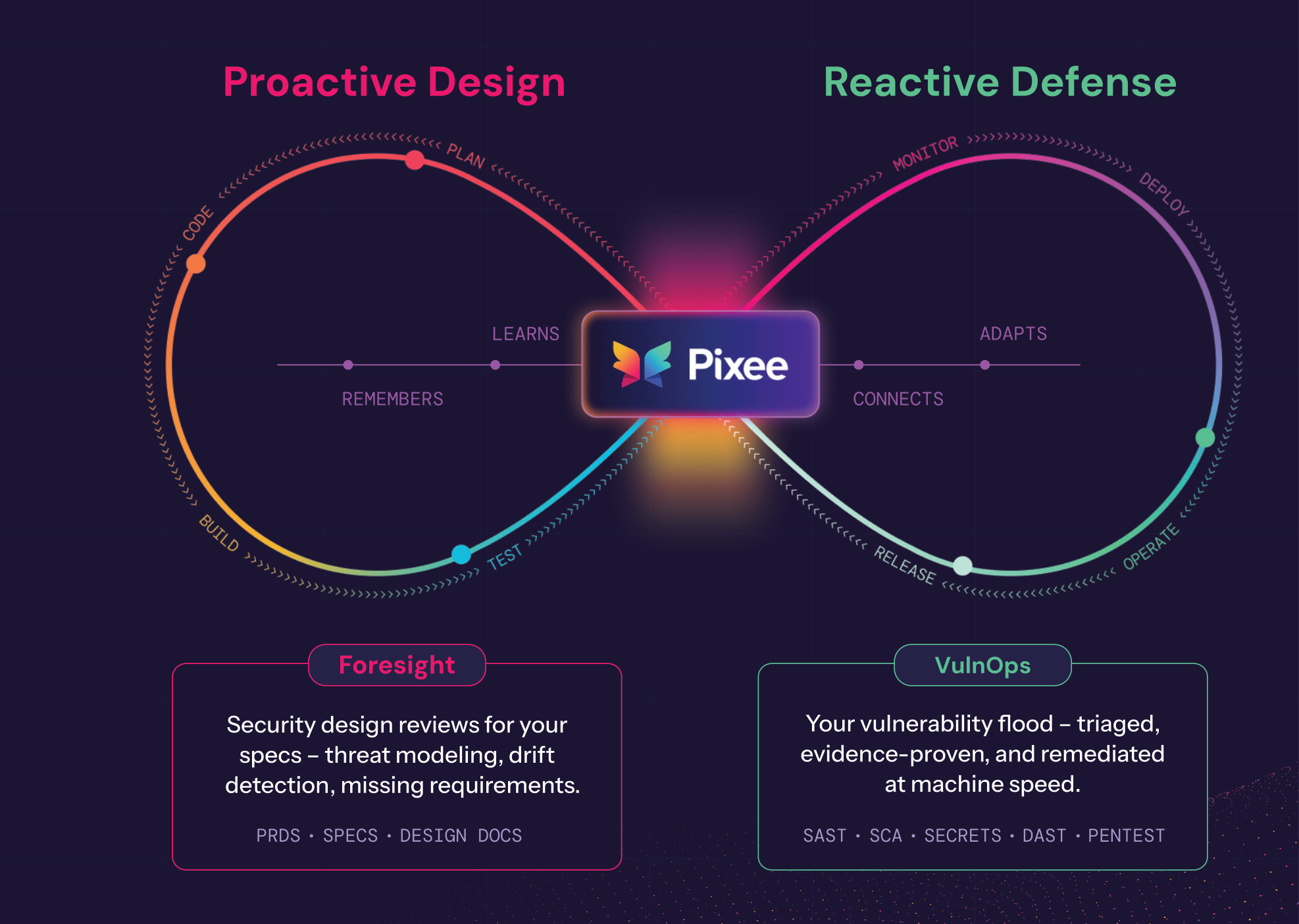
The average org carries 569,354 open alerts. Foresight helps stop design-stage risk from becoming tomorrow's backlog.
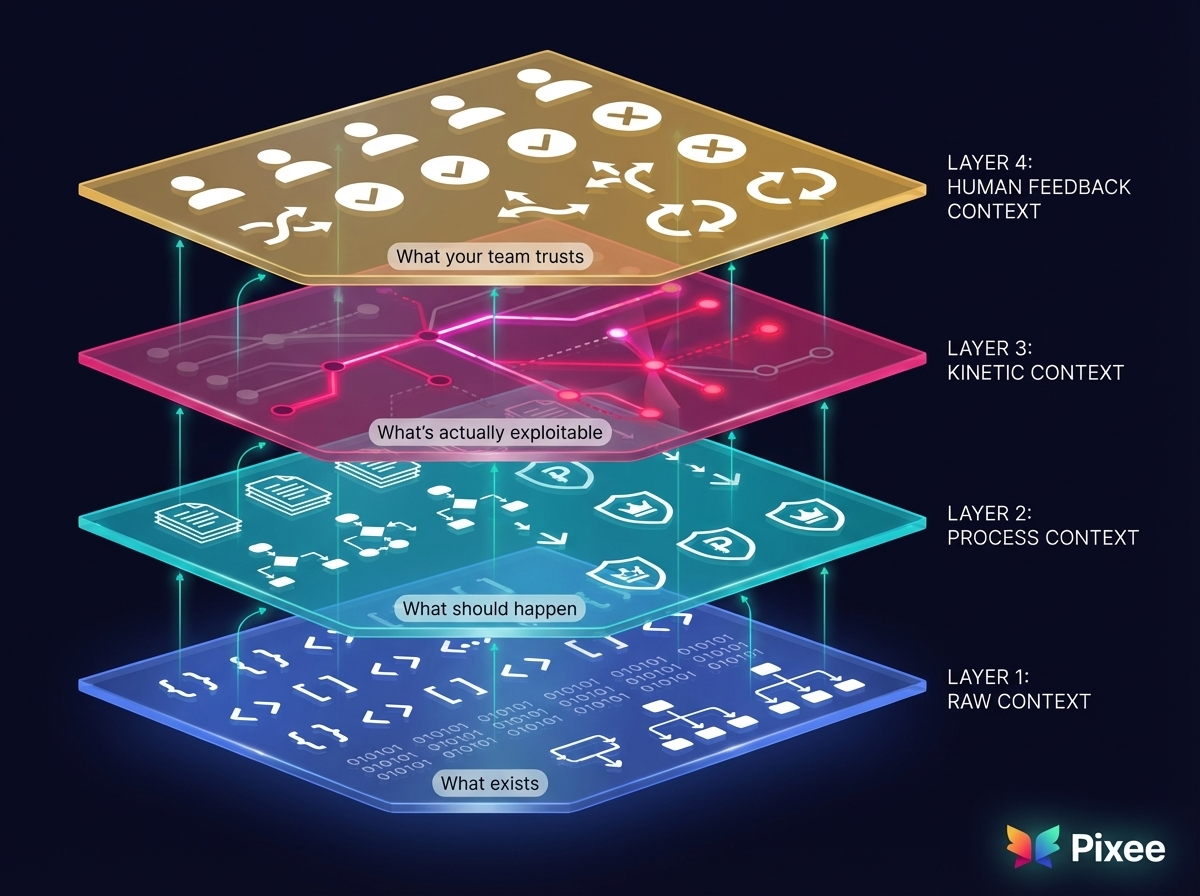
A private, per-customer model of your codebase, scanners, conventions, history, and architecture. Never shared, never used to train shared models. It's why Triage & Fix reads exploitability right for your deployment, and why Foresight knows what each design is supposed to protect.
Security doesn't start at the pull request. It starts at the design.








That's the failure mode we built against. The design stage is a handful of decisions, not a thousand code patterns — and every finding ties to a spec line you confirm or dismiss in one click. An audit trail, not another alert stream.
For one PRD, yes — and you should. But a prompt only reviews the spec you remembered to paste in; Foresight reads every spec as it's written, tracks the promises into your tickets, and checks shipped code at PR time. A threat model you run once versus one that runs as a system.
No — that's the point. Half of security defects are design flaws, not bugs (IEEE): a decision like data exported with no encryption, or tokens that should be single-use but aren't. No pattern, no CVE — the code does exactly what the design told it to.
Foresight reads whatever describes intent — Jira, Linear, Confluence, design docs — and runs on your own Azure OpenAI, OpenAI, or Anthropic instance, no lock-in. It doesn't replace your scanners or in-editor assistants; it's the design-stage layer they can't reach.
Triage & Fix is reactive — it cuts your backlog to what's exploitable and ships fixes developers merge (76%). Foresight is proactive — it secures the design so the backlog never forms. One platform, one context graph; most teams run both.
The next decade of security gets won upstream, at the speed of agents.
Bring a real spec. We'll show you the promises it makes, the threats it misses, and where last sprint's code already drifted.
No credit card · ~30-minute working session · Your spec stays confidential

The briefing security leaders actually read. CVEs, tooling shifts, and remediation trends — distilled into 5 minutes every week.
Join security leaders who start their week with the briefing. Free, 5 minutes, no fluff.
First briefing drops this week. Check your inbox.
Weekly only. No spam. Unsubscribe anytime.